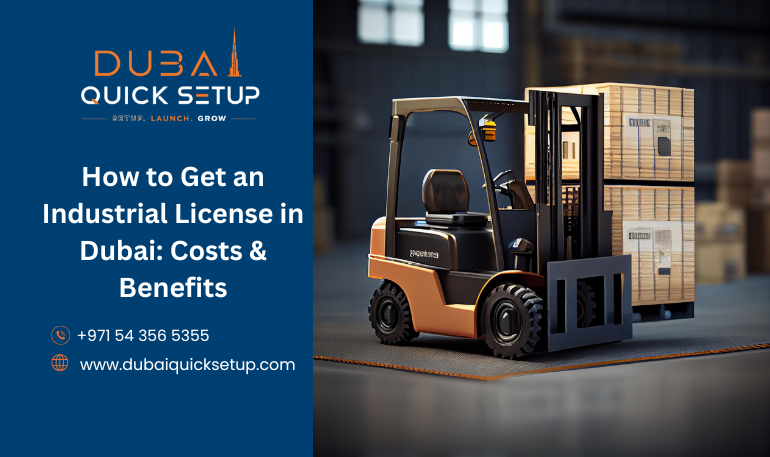
Are you planning to start a business in Dubai and wondering about the requirements for obtaining an industrial license? Dubai has rapidly transformed into one of the leading industrial and manufacturing hubs in the Middle East. With world-class infrastructure, strategic global connectivity, and investor-friendly policies, the emirate attracts entrepreneurs looking to establish factories, production units, and industrial facilities.
If you’re planning to start a manufacturing business, obtaining an industrial license in Dubai is your first and most important step. This comprehensive guide explains everything—from requirements and costs to the step-by-step process—while helping you understand how Dubai Quick Setup can simplify the entire journey.
What is an Industrial License in Dubai?
An industrial license in Dubai is a legal permit that allows businesses to manufacture, process, assemble, or package goods within the UAE.
This license is issued by the Department of Economy and Tourism (DET) for mainland businesses or by relevant free zone authorities.
Activities Covered Under Industrial License:
- Manufacturing finished goods
- Processing raw materials
- Assembling products
- Packaging and labelling goods
- Importing raw materials
- Exporting finished products
In simple terms: If your business involves the production or transformation of goods, you need an industrial license.
Why Start an Industrial Business in Dubai?
Dubai offers unmatched advantages for industrial investors:
1. Strategic Location
Dubai connects Asia, Europe, and Africa, making it ideal for global trade and exports.
2. Strong Industrial Growth
Manufacturing contributes significantly to Dubai’s economy, supported by government initiatives like Dubai Industrial Strategy 2030.
3. 100% Foreign Ownership
Most industrial sectors now allow full foreign ownership under UAE laws.
4. Tax Benefits
- 0% personal income tax
- Competitive corporate tax rates
- Customs benefits in free zones
5. World-Class Infrastructure
- Ports (Jebel Ali)
- Airports
- Industrial zones
- Logistics facilities
Types of Industrial Licenses in Dubai
Choosing the right license type is crucial:
1. Light Industrial License
- Small-scale production
- Workshops and assembly units
- Minimal machinery
2. Medium Industrial License
- Food processing
- Textile manufacturing
- Furniture production
3. Heavy Industrial License
- Chemical production
- Large-scale factories
- Heavy machinery manufacturing
Mainland vs Free Zone Industrial License
| Feature | Mainland | Free Zone |
|---|---|---|
| Market Access | UAE + International | Mainly International |
| Ownership | 100% Allowed | 100% Allowed |
| Office Requirement | Mandatory | Flexible options |
| Customs Benefits | Limited | High |
| Setup Cost | Moderate | Can be lower |
Dubai Quick Setup Tip:
Choose mainland if targeting UAE market, and free zone if focusing on exports.
Requirements for Industrial License in Dubai
To apply for an industrial license, you must meet the following conditions:
1. Business Activity Selection
You must define your manufacturing activity clearly.
2. Legal Structure
Common structures include:
- LLC (most popular)
- Sole establishment
- One-person company
3. Physical Facility
A factory, warehouse, or industrial unit is mandatory. Virtual offices are not allowed.
4. Initial Approvals
Approvals may be required from:
- DET (Department of Economy & Tourism)
- Ministry of Industry & Advanced Technology (MOIAT)
- Dubai Municipality
- Civil Defense
5. Environmental & Safety Compliance
You must meet health, safety, and environmental regulations.
Step-by-Step Process to Get an Industrial License in Dubai
Here is the complete process:
Step 1: Choose Business Activity
Identify your industrial activity (manufacturing, processing, etc.).
Step 2: Select Jurisdiction
Decide between:
- Mainland
- Free zone
Step 3: Reserve Trade Name
Register your business name with the authorities.
Step 4: Apply for Initial Approval
Get approval from DET or free zone authority.
Step 5: Secure Industrial Facility
Lease a warehouse or factory in an approved industrial zone.
Step 6: Obtain External Approvals
Approvals may include:
- MOIAT industrial production certificate
- Dubai Municipality clearance
- Civil Defense approval
Step 7: Submit Documents
Required documents typically include:
- Passport copies
- Business plan
- Lease agreement
- Memorandum of Association (MOA)
Step 8: Inspection Process
Authorities inspect your facility for compliance.
Step 9: Pay Fees & Get License
Once approved, pay fees and receive your industrial license.
The process usually takes 2 to 8 weeks, depending on approvals.
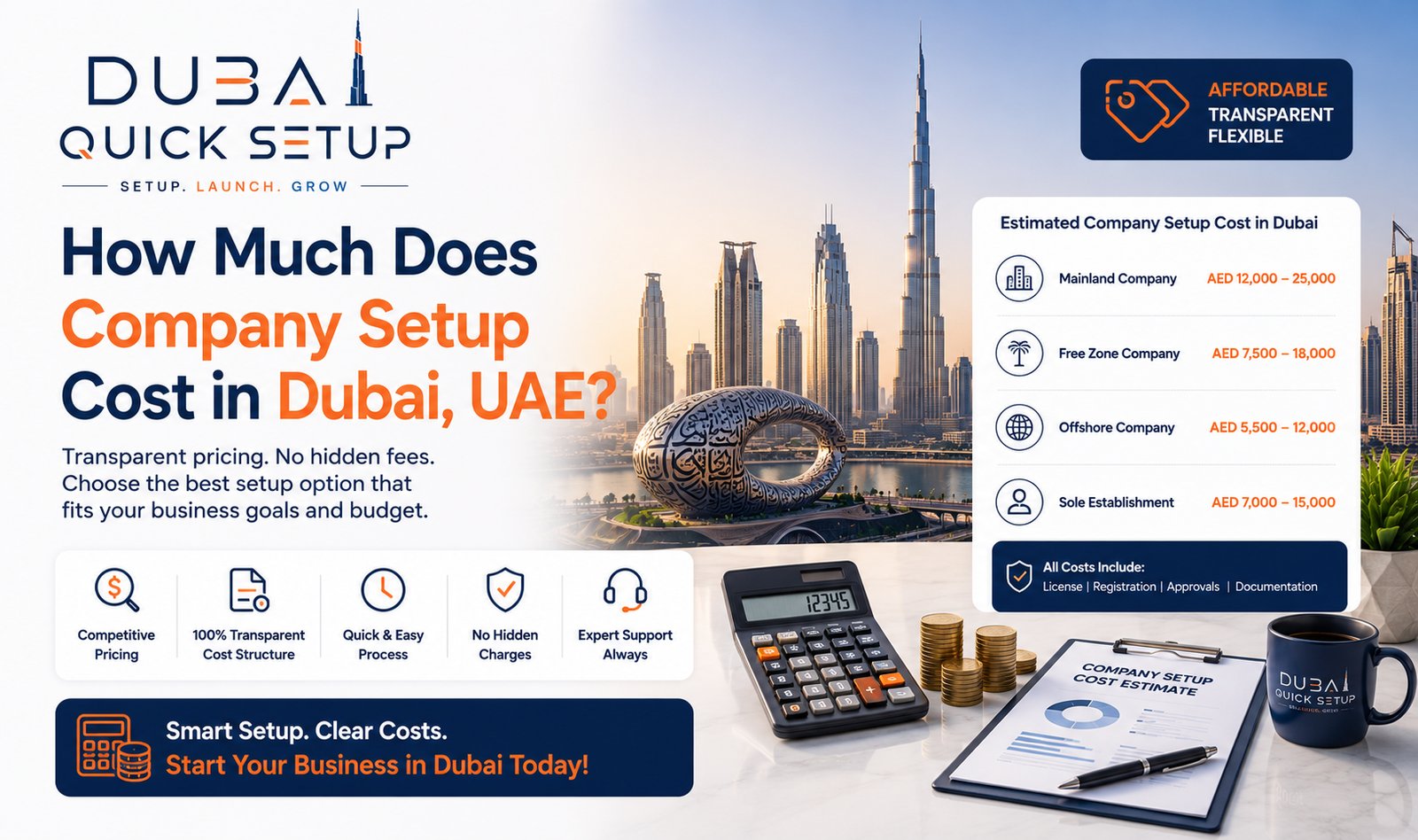
Cost of Industrial License in Dubai (2026)
The cost varies depending on business size and location.
Estimated Cost Breakdown:
- License fees: AED 14,000 – AED 30,000
- Free zone license: Starting from AED 25,000+
- Warehouse/factory rent: AED 50,000 – AED 500,000+
- Civil defense & approvals: AED 2,000 – AED 5,000+
Important: Industrial setups are more expensive than commercial licenses due to infrastructure requirements.
Documents Required for Industrial License in Dubai
An industrial license allows you to engage in manufacturing, processing, and other industrial activities legally. Without this license, you risk facing penalties and legal consequences for operating without proper authorisation.
- Business Plan: A comprehensive business plan outlining your industrial business’s objectives, products, services, target market, and financial projections is a must-have document for your license application.
- Memorandum of Association: This legal document outlines the company’s objectives and structure and must be submitted to the Department of Economic Development (DED).
- Approval from Relevant Authorities: Depending on the nature of your industrial business, you may need approvals from other government authorities, such as the Dubai Municipality or Dubai Civil Defence.
- Lease Agreement: A copy of the lease agreement for your industrial premises is essential to prove that you have a physical space to conduct your industrial activities.
- NOC from the Landlord: You will need a No Objection Certificate (NOC) from the landlord of your industrial premises, stating that they have no objection to you using the space for industrial purposes.
- Passport Copies: Copies of the passports of all shareholders in the company are required for the license application.
- Visa Page Copies: Copies of the visa pages of all shareholders are also necessary to prove their residency status in the UAE.
Additional Documents that May be Required
- Environmental Impact Assessment: If your industrial business has potential environmental implications, you may need to submit an Environmental Impact Assessment report.
- Health and Safety Certificates: Certificates demonstrating compliance with health and safety regulations may be required for certain industrial activities.
- Technical Evaluation Report: Some industrial activities may require a technical evaluation report to ensure compliance with technical standards and specifications.
- Trade Name Reservation Certificate: Before applying for an industrial license, you may need to reserve a trade name for your business with the DED.
Benefits of Industrial License in Dubai
1. Global Market Access
Export products worldwide with ease.
2. Government Support
Access incentives under UAE industrial policies.
3. Scalability
Easily expand production capacity.
4. Import/Export Flexibility
Import raw materials and export finished goods legally.
Why Choose Dubai Quick Setup?
Setting up an industrial business can be complex—but that’s where Dubai Quick Setup comes in.
Our Services:
- Business consultation
- License application & approvals
- Factory location support
- PRO services
- Visa & bank account assistance
Why Clients Choose Us:
- Fast-track approvals
- Transparent pricing
- End-to-end support
- Expertise in industrial licensing
In conclusion, obtaining an industrial license in Dubai is the gateway to entering one of the fastest-growing manufacturing markets in the world. While the process involves multiple approvals, facility requirements, and compliance standards, the long-term benefits far outweigh the initial effort.
With expert guidance from Dubai Quick Setup, you can simplify the process, reduce delays, and launch your industrial business efficiently.
FAQs – How to Get an Industrial License in Dubai
An industrial license in Dubai is a legal permit that allows businesses to manufacture, process, assemble, or package goods. It is mandatory for any company involved in production or factory-based operations.
The cost typically ranges from AED 14,000 to AED 30,000+ for the license alone, while total setup (including warehouse and approvals) can be significantly higher depending on business activity and location.
It usually takes 2 to 8 weeks, depending on approvals from government authorities and the readiness of your industrial facility.
Yes, in most sectors foreigners can enjoy 100% ownership, especially in free zones and many mainland activities under UAE business laws.
Yes. A physical industrial facility is mandatory. Virtual offices are not allowed for industrial licenses in Dubai.
The license is issued by the Department of Economy and Tourism (DET) for mainland businesses, along with approvals from MOIAT and other regulatory authorities.
Yes. An industrial license allows you to import raw materials and export finished goods globally, making Dubai a strong manufacturing hub.
An industrial license is for manufacturing and production activities, while a commercial license is for trading goods without changing their form.
Yes. You can start with a light industrial license, which is suitable for small-scale manufacturing and workshops.
An industrial license is generally valid for 1 year and must be renewed annually.

Mohamed Aasik is an SEO Expert in Dubai and the Founder of Shaaz SEO Agency. With over 10 years of experience in SEO, website development, and digital marketing, he helps businesses improve their Google rankings, increase website traffic, and generate quality leads. He has successfully completed 150+ projects across various industries.
Business Cost Calculator
Why Dubai Mainland is Best Choice for Business Setup in 2026
Dubai Media City Company Setup Cost: Latest Fees & Packages
Start Your UAE Business Today with a Dubai Free Zone License
ISO Certification Dubai: Cost, Process & Benefits Explained 2026
How Much Does Company Setup Cost in Dubai, UAE?